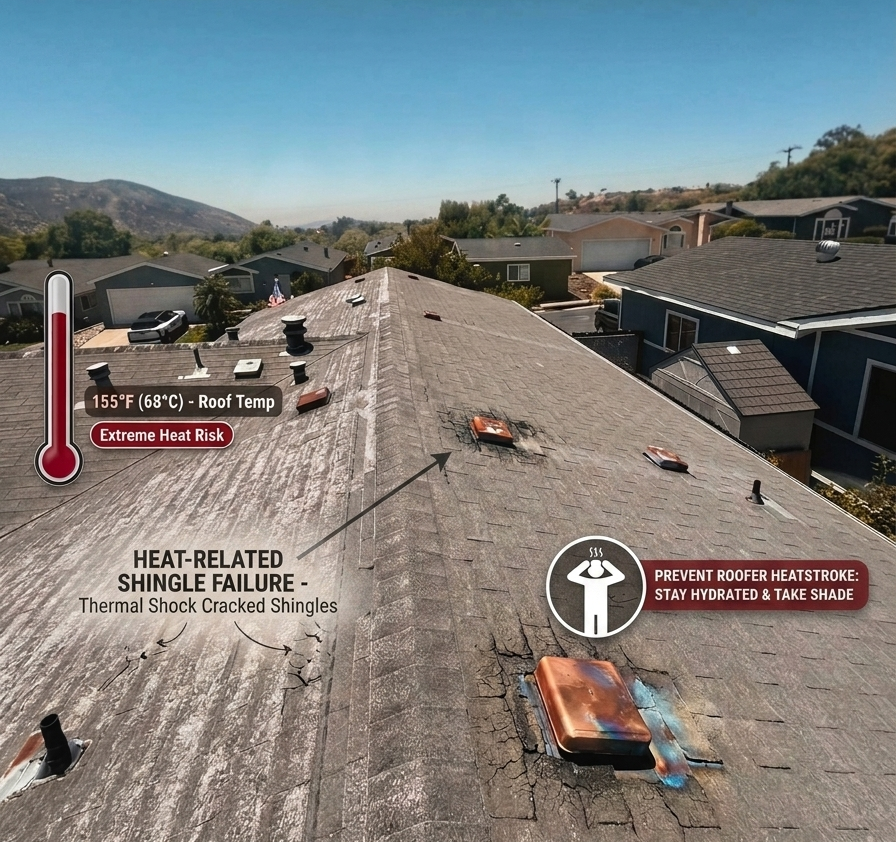
Summer in San Diego County isn’t just warm—it’s hot, dry, and sometimes extreme. Homes across the region face direct solar heat for months, causing roofing materials to break down faster than in cooler climates. For homeowners in communities like El Cajon, Chula Vista, Oceanside, Escondido, Carlsbad, Poway, Encinitas, and San Diego, preparing your roof before the heat wave hits isn’t optional—it’s smart.
Your roof is your home’s first line of defense against heat, UV rays, and rising indoor temperatures. A well-maintained roof reduces cooling costs, protects against water intrusion, and helps your home stay comfortable without overworking your HVAC system. Failing to act now can mean serious roofing issues by late summer, including mold growth, leaks, or warped shingles.
Step 1: Schedule a Professional Roof Inspection
A proper roof inspection is the foundation of summer preparation. Unlike a quick glance from the driveway, a true inspection evaluates every element that contributes to your roof’s performance, including shingles or tiles, underlayment, flashing, ventilation systems, and decking health.
What a Professional Looks For:
- Cracked or Curling Shingles: Heat exposure causes asphalt shingles to dry out and curl, losing their protective granules
- Loose Concrete or Clay Tiles: Common in Southern California homes, these can shift during cooler seasons and become vulnerable
- Flashing and Sealant Gaps: Areas around chimneys, skylights, and vents often show wear first
- Hidden Decking Damage: Underlayment can become brittle from years of sun exposure even if the surface looks intact
Why Local Expertise Matters:
Each San Diego community faces unique challenges. Coastal neighborhoods such as Oceanside, Encinitas, and Carlsbad deal with salt air and marine moisture that corrode metal fasteners and flashing. Inland areas including Escondido, Poway, and El Cajon experience more intense dry heat stress and UV weakening of adhesives. These regional differences make a detailed inspection essential—no two neighborhoods age the same way.
Step 2: Clean Gutters and Remove Debris
A clean roof reflects more sunlight. Dirt, leaves, and debris trap heat and encourage algae or mold growth, lowering your roof’s performance.
The Impact of Neglect:
- Pine needles, dust, and sand can clog your drip edge and valleys, blocking water flow
- Stagnant water during summer storms can lead to gradual roof damage
- Blocked gutters prevent proper drainage, potentially causing water to back up under the roofing material
Action Plan:
Clean out gutters and downspouts thoroughly at the beginning of summer and again mid-season. Remove branches, moss, or algae, especially if your roof is under trees or in a shaded area.
Important Safety Warning:
Never walk on your roof during the hottest part of the day. Roofing materials soften in heat, increasing the risk of accidental damage, and shingles can become dangerously hot. Avoid DIY power washing, especially on slate tiles or older shingles—work with a professional experienced in safe cleaning practices for different roofing materials.
Step 3: Check and Upgrade Attic Ventilation
One of the most important—and often overlooked—steps is ensuring proper attic ventilation. Poor ventilation can turn your attic into a giant oven that cooks your roof from below and drives up cooling costs.
The Problem:
When heat builds up under the roof, it raises indoor temperatures and shortens your roof’s lifespan. A poorly ventilated attic strains your air conditioning system and leads to higher utility bills.
Signs of Poor Ventilation:
- Hot, stuffy attic air
- Mold or mildew growth on rafters or insulation
- Increased cooling costs in summer
- Strong heat flow when you open your attic access
Solutions:
- Ridge Vents: Installed along the roof peak to allow hot air to escape
- Soffit Vents: Located under eaves to facilitate cool air intake
- Attic Fans: Electric or solar-powered options that actively draw out hot air
- Gable Vents: Provide additional airflow at the gable ends
Better ventilation means cooler air circulation, reduced chance of mold growth, and longer-lasting roofing systems. For Oceanside homes, proper ventilation is especially critical due to the coastal moisture that can accelerate decking and underlayment deterioration.
Step 4: Consider Energy-Efficient Roofing Upgrades
If your roof is more than 15 years old or you’re seeing increased utility bills, it may be time to upgrade to energy-efficient roofing systems.
What Is a Cool Roof?
Cool roofs are designed to reflect more sunlight and absorb less heat than traditional roofs. They use special reflective materials that can significantly reduce the amount of heat transferred to the building below.
Key Benefits:
- Reduced Energy Costs: Can reduce cooling costs by 10-30% or up to 20% annually
- Lower Roof Surface Temperatures: According to the U.S. Department of Energy, homes with cool roof systems can reduce surface temperatures by up to 50°F
- Extended Roof Lifespan: Reflects damaging ultraviolet and infrared rays that deteriorate many roofs over time
- Environmental Impact: Reduces greenhouse gas emissions and helps mitigate the urban heat island effect
- Potential Financial Incentives: Look into local rebates, grant opportunities, and tax deductions
Cool Roof Options:
- Reflective Roof Coatings: Applied over existing roofs to create a barrier against heat absorption
- Light-Colored Membranes: TPO (Thermoplastic Polyolefin) has high solar reflectance and is resistant to UV damage
- Reflective Shingles and Tiles: Modern options that combine traditional appearance with energy efficiency
Radiant Barriers and Insulation
Installing a radiant barrier beneath your roof deck can further improve energy efficiency. For Oceanside and coastal area homes, upgrading attic insulation to R-38 or higher helps stabilize temperatures and reduce drafts.
Solar Panels
Many North San Diego homeowners add or upgrade solar panels, which can help offset summer electric bills. Integrated roofing and solar projects are especially beneficial because they prevent needing to pull off panels later for repairs.
Step 5: Address Minor Repairs Before They Escalate
Summer’s extreme heat makes existing damage worse. Small problems like loose shingles or cracked seals can quickly turn into major roof repairs.
Common Summer Wear Issues:
- Asphalt Granulation Loss: Granules in gutters indicate shingles are aging and losing UV protection
- Metal Roof Expansion: Summer heat causes panels to expand and contract, loosening screws with rubber washers or warping flashing
- Sealant Failure: The sun dries out sealants around flashing, vents, and skylights, allowing leaks to develop
- Rubber Seal Cracking: Pipe boots and satellite mounts break down faster in the sun
Action Plan:
Early summer is the perfect time to fix minor wear before labor costs go up later in the season or you face urgent repairs. A certified contractor can replace damaged shingles, seal joints, and update fasteners to prevent future issues.
Step 6: Protect Your Roof with Regular Maintenance
Preventative roof maintenance during summer helps you stay ahead of weather-related problems.
Monthly Checkups:
- Watch for signs of wear throughout the season, including cracked, curling, or missing shingles
- Monitor for soft spots or sagging areas that may indicate structural problems
- Check for algae or mold growth, especially in shaded areas
Replace vs. Repair Decision:
If your roof is nearing the end of its service life—typically 20–25 years for asphalt shingles, 30–50 for metal roofing—it may be time to think about a full roof replacement. Frequent patch jobs and increasing roofing issues often point to deeper structural concerns. Replacing during summer gives you a head start on protection before the cooler seasons arrive.
Local Considerations for San Diego Communities
Each area within San Diego County presents unique challenges for roof preparation:
Conclusion
Preparing your roof for summer heat is an investment in comfort, savings, and home protection. Following this comprehensive guide, you can:
- Schedule a professional inspection to catch hidden damage early
- Clean gutters and remove debris to prevent heat retention and water damage
- Upgrade attic ventilation to combat heat buildup and reduce cooling costs
- Consider energy-efficient options like cool roofs, reflective coatings, or solar panels
- Address minor repairs before heat makes them worse
- Maintain regularly throughout the season
Whether you live in Oceanside dealing with salt air, Escondido facing extreme heat, or Chula Vista addressing urban heat island effects, a proactive approach to roof maintenance pays off. A well-maintained roof keeps your home cooler, reduces utility bills, and extends the lifespan of your roofing system.
Don’t wait until the heat wave hits. Contact a local roofing professional who understands the specific conditions of your San Diego community and get your roof ready for summer today.